PidPlates custom 3D emblems designed for durability in demanding environments

In the previous part of this guide, we explored how material selection affects the appearance, performance, and value of a custom 3D emblem. However, choosing the right material is only part of the process.

A successful emblem must also be able to handle the conditions it will face after the product reaches the customer. The environment, handling, and application requirements should influence the design from the beginning.

Your emblem has a life after the product is bought.

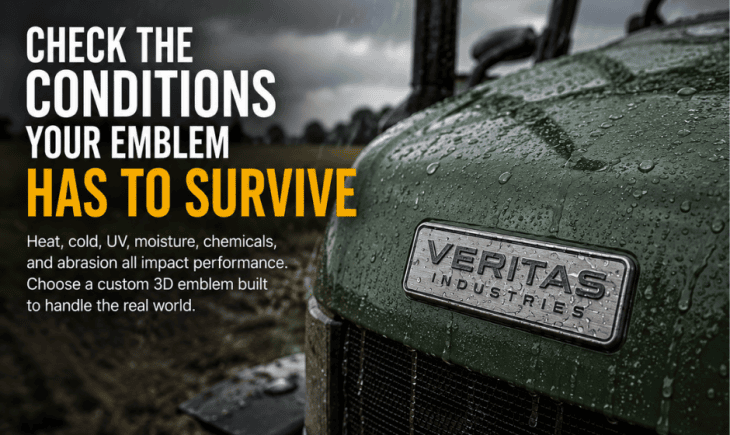
It may be handled daily. Cleaned weekly. Shipped in bulk. Stored outdoors. Installed on a vibrating panel. Exposed to moisture, sun, dust, oil, abrasion, or temperature swings.

These conditions should shape the spec early.

Even two products with the same emblem may need different materials or mounting methods because their environments are not the same.

For example, an emblem on indoor consumer packaging has a different job from one on a marine product. A badge on construction equipment needs different thinking from one on a retail display fixture.

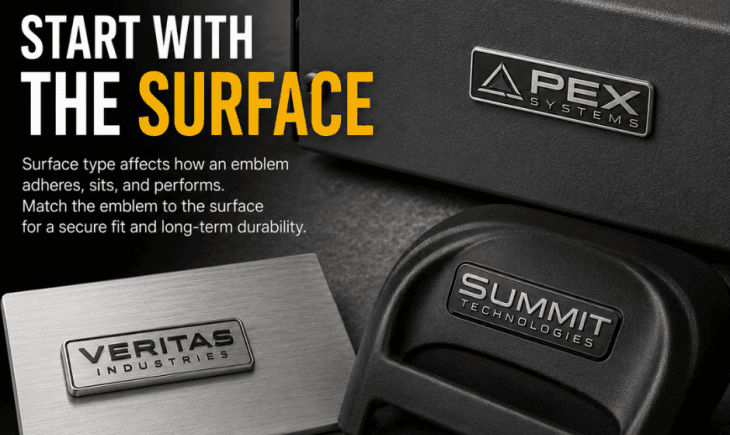
Adhesive choice also matters. A good adhesive on the wrong surface can still fail. Surface texture, coating, curvature, and exposure all affect how well the emblem stays attached.

If your emblem has to survive real use, don’t choose it like a sticker. Choose it like a product component.

A custom 3D emblem should be designed for the environment where it will operate, not just how it looks during the approval stage. Durability, attachment method, and material performance all contribute to the long-term success of the final product.

At PidPlates, we help manufacturers develop custom emblems that are built around real application requirements, including outdoor exposure, industrial handling, cleaning conditions, and demanding operating environments.

If you need help selecting the right emblem solution for your product, contact PidPlates to review your application and request a free quote with a 3D mockup option.

In the next part of this guide, we’ll discuss why considering the emblem early in the production process can help manufacturers avoid design limitations and create better final results.
PidPlates custom 3D emblems designed for different product surfaces

In the first part of this guide, we explained that choosing a custom 3D emblem is not only about selecting a design that looks attractive. The right emblem must match the product, surface, environment, and expectations of the market it serves.

Now that you understand when a 3D emblem makes sense for an industrial product, the next step is knowing how to choose the right option.

Choosing the right emblem is less about picking the nicest-looking finish and more about matching the emblem to the product it has to live on. Here are four practical tips for choosing the right 3D emblem for your industrial product.

Tip #1: Start with Your Product Surface

Your emblem has to meet the surface before it meets your buyer.

Is the surface flat or curved? Smooth or textured? Painted, powder-coated, molded, brushed, plated, or polished? Is it plastic, metal, glass, composite, or coated material?

A flat equipment panel may need a rigid metal badge. A curved appliance panel needs a pre-formed emblem. A textured powder-coated surface needs a different adhesive than smooth painted metal.

This is where many emblem decisions go wrong. The emblem looks good in the mockup, but the real surface tells a different story.

Starting with the surface makes sure your custom 3D emblem looks like it belongs on the product body, not like it was added as an afterthought.
 

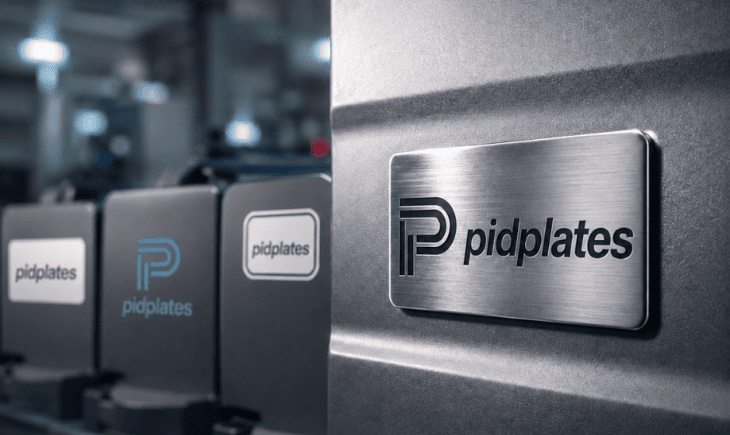
The product surface is one of the first factors that determines how well an emblem performs and how naturally it integrates with the finished product. A proper match between the emblem and the application helps create a cleaner, more professional result.

At PidPlates, we help manufacturers select the right emblem construction, finish, and mounting approach based on their specific product needs. Our team works with you to develop a solution that fits your application and brand requirements.

If you’re evaluating a custom 3D emblem for your industrial product line, contact PidPlates to discuss your project and request a free quote with a 3D mockup option.

In the next part of this guide, we’ll explore how choosing the right material can impact durability, appearance, and the overall value of your product branding.

Premium industrial products comparing branding methods, including a custom 3D metal emblem by Pidplates, a printed label, a screen printed logo, and a standard decal.

Some branding companies may not tell you this, but we’ll say it plainly.

Custom 3D emblems aren’t automatically the right choice for every product, surface, or price point. Sometimes a flat label, printed logo, screen-printed mark, rating plate, or standard decal is the smarter decision.

If your product is temporary, hidden during normal use, built for a very low-cost category, or likely to take constant surface damage, a 3D emblem may add cost without adding enough buyer-visible value.

A study on 3D printed personalized products found that people rated them higher than standard versions on perceived value measures. But willingness to pay did not rise enough to cover higher production costs in every product category.

That’s a useful warning to remember that value must survive the spreadsheet.

3D emblems work best when the buyer or end-user sees the brand mark during evaluation or use, when the product’s price point supports the material choice, and when the operating environment is one the emblem can actually survive.

If your industrial product meets these criteria, the next question is how to choose the right 3D emblem. Continue reading to learn how.

A custom 3D emblem should do more than simply display a logo. It should support the way your product is perceived, handled, and remembered.

At PidPlates, we help manufacturers evaluate the right emblem style, material, and construction method for their specific application. Whether you need a premium brand badge, a durable industrial emblem, or a custom solution designed around your product requirements, our team can help guide the process.

Visit PidPlates to explore custom branding solutions for industrial products, or contact our team to discuss your project and request a free quote with a 3D mockup option.

PidPlates USA explains how surface, material, environment, and production volume impact custom 3D emblems for industrial product branding.

What types of products benefit most from 3D emblems?

Custom 3D emblems work best on products where the buyer or end-user sees the brand during evaluation, purchase, installation, or daily use.

That includes industrial equipment, tools, appliances, outdoor gear, automotive and mobility products, marine products, retail fixtures, luxury packaging, consumer products, and commercial equipment.

The emblem has more value when it sits on a visible surface and supports the product’s category. If your buyer never sees the mark, or the product is hidden after installation, a simpler marking method may make more sense.

What should manufacturers consider before ordering 3D emblems?

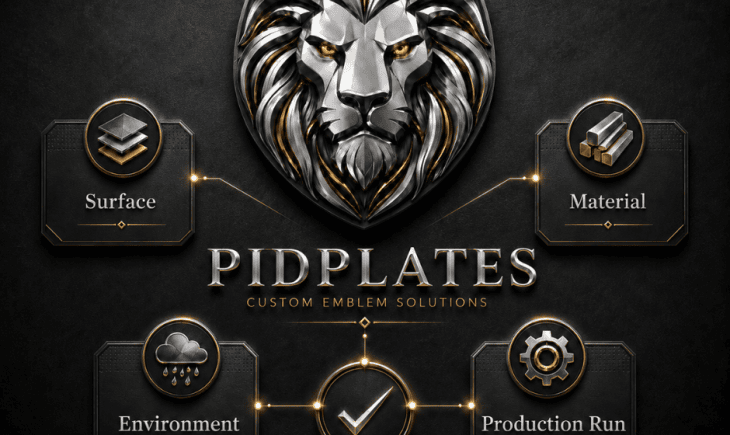
Consider four things first: surface, material, environment, and production volume.

You need to know where the emblem will sit, what that surface is made from, what conditions the product will face, and how many units need the same result. Then, you can choose the material, finish, height, adhesive or mounting method, and edge profile.

The earlier you make those decisions, the cleaner the final product usually looks. Plus, a custom 3D emblem that was part of the original product brief costs less than one specified after production. 

A well-chosen emblem gives your buyer one more reason to trust the product. It’s a small detail, but it gives a big signal. 

If you’re looking to specify custom 3D emblems for your B2B product line, PidPlates can help you match the emblem construction to your product and brand standards. 

Request a free quote today, and you’ll also receive a free 3D mockup file. 

Upon request, we can also send free generic 3D product samples, so your team can review the look, feel, and quality before moving forward.