 English
In the previous part of this guide, we explored how material selection affects the appearance, performance, and value of a custom 3D emblem. However, choosing the right material is only part of the process.
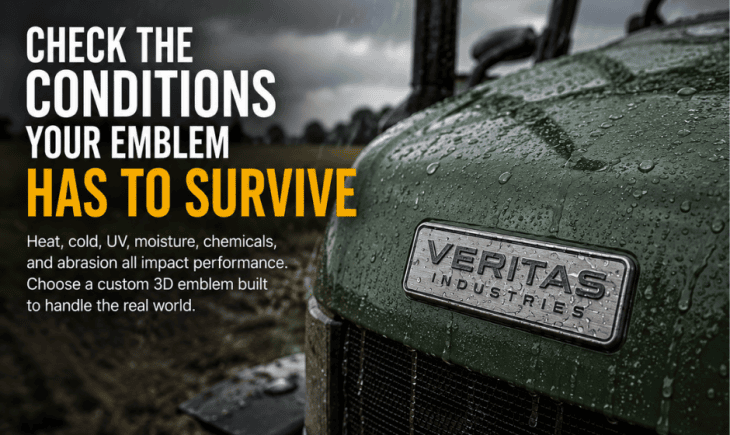
A successful emblem must also be able to handle the conditions it will face after the product reaches the customer. The environment, handling, and application requirements should influence the design from the beginning.
Your emblem has a life after the product is bought.
It may be handled daily. Cleaned weekly. Shipped in bulk. Stored outdoors. Installed on a vibrating panel. Exposed to moisture, sun, dust, oil, abrasion, or temperature swings.
These conditions should shape the spec early.
Even two products with the same emblem may need different materials or mounting methods because their environments are not the same.
For example, an emblem on indoor consumer packaging has a different job from one on a marine product. A badge on construction equipment needs different thinking from one on a retail display fixture.
Adhesive choice also matters. A good adhesive on the wrong surface can still fail. Surface texture, coating, curvature, and exposure all affect how well the emblem stays attached.
If your emblem has to survive real use, don’t choose it like a sticker. Choose it like a product component.
A custom 3D emblem should be designed for the environment where it will operate, not just how it looks during the approval stage. Durability, attachment method, and material performance all contribute to the long-term success of the final product.
At PidPlates, we help manufacturers develop custom emblems that are built around real application requirements, including outdoor exposure, industrial handling, cleaning conditions, and demanding operating environments.
If you need help selecting the right emblem solution for your product, contact PidPlates to review your application and request a free quote with a 3D mockup option.
In the next part of this guide, we’ll discuss why considering the emblem early in the production process can help manufacturers avoid design limitations and create better final results.