 English
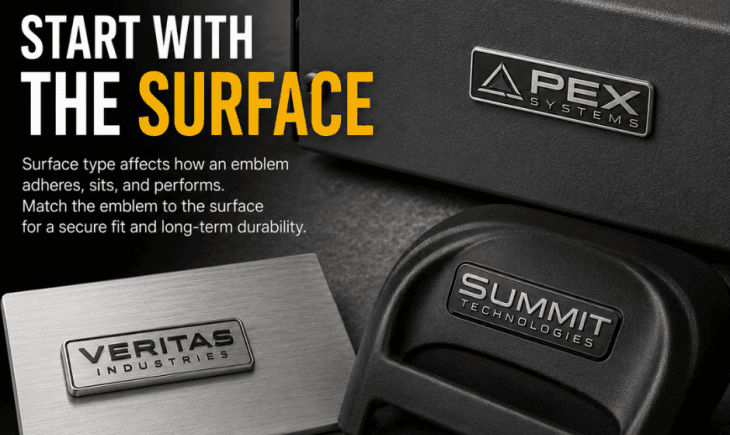
In the first part of this guide, we explained that choosing a custom 3D emblem is not only about selecting a design that looks attractive. The right emblem must match the product, surface, environment, and expectations of the market it serves.
Now that you understand when a 3D emblem makes sense for an industrial product, the next step is knowing how to choose the right option.
Choosing the right emblem is less about picking the nicest-looking finish and more about matching the emblem to the product it has to live on. Here are four practical tips for choosing the right 3D emblem for your industrial product.
Tip #1: Start with Your Product Surface
Your emblem has to meet the surface before it meets your buyer.
Is the surface flat or curved? Smooth or textured? Painted, powder-coated, molded, brushed, plated, or polished? Is it plastic, metal, glass, composite, or coated material?
A flat equipment panel may need a rigid metal badge. A curved appliance panel needs a pre-formed emblem. A textured powder-coated surface needs a different adhesive than smooth painted metal.
This is where many emblem decisions go wrong. The emblem looks good in the mockup, but the real surface tells a different story.
Starting with the surface makes sure your custom 3D emblem looks like it belongs on the product body, not like it was added as an afterthought.
The product surface is one of the first factors that determines how well an emblem performs and how naturally it integrates with the finished product. A proper match between the emblem and the application helps create a cleaner, more professional result.
At PidPlates, we help manufacturers select the right emblem construction, finish, and mounting approach based on their specific product needs. Our team works with you to develop a solution that fits your application and brand requirements.
If you’re evaluating a custom 3D emblem for your industrial product line, contact PidPlates to discuss your project and request a free quote with a 3D mockup option.
In the next part of this guide, we’ll explore how choosing the right material can impact durability, appearance, and the overall value of your product branding.